All Activity
This stream auto-updates
- Past hour
-
resurrected?
-

Onan P-Series Ignition Module Replacement [Photos]
Handy Don replied to Duramax7man7's topic in Engines
Like others, I made a puller. I used four grade 8 bolts and a piece of ⅜” plate. I put a nut on the end of the crankshaft to protect the threads, put the plate against that and then put the oiled bolts in. Slowly criss-cross tightened the bolts while tapping the around the flywheel and on the plate with a plastic-face hammer until it popped. Not elegant but it worked without damage. The plate did bend slightly right before the flywheel gave up and came loose. -
Onan P-Series Ignition Module Replacement [Photos]
wh315-8 replied to Duramax7man7's topic in Engines
I wouldn’t use heat. Did you try using an impact. Check out this video..if it doesn’t work just go to YouTube and search Onan flywheel removal -
How exactly does one list that on the harvest report?
-
Only one of them was mine!
- Today
-
Four doe right at dark this evening. Just got a report that a deer jumped thru my neighbors picture window cutting itself badly. It ran thru the house and died in the bathroom. What a mess.
-
Hey Mike, you really need to start putting some oil in your engines! LOL
- Yesterday
-
We don't really get any "free" money. My daughter did get one of the $250 grants from the Dell Foundation, but both are much too old to qualify for the $1000 seed from the treasury dept. A uniform transfer to minor investment account would likely be better, but for as old as my kids are already most differences between the various types of investments a not likely to exceed $100 before they turn 18.
-
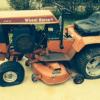
I have a 1969 Raider model that has had butchering on the hoodstand. Hoodstand part number 7881 I also have a 1973 8-8 model 1-0370 8 sort of a parts tractor. Hoodstand part number 102795 The tractors are not stored in the same place, so it hard to compare the hoodstands from pictures, but they seem similar. I know Wheel Horse change part numbers at one point in time to get around some sort of federal price regulations, I think in the Nixon years. Can anyone, tell me if these Hoodstands are the same? Maybe @gwest_ca This is the 1969 Raider 12 In has another hole in the rear, besides the one pictures, and weld scab repair This is the 1973 8-8
-
Betcha y’all didn’t know 300
c-series don replied to 953 nut's topic in non tractor related discussion
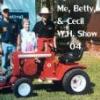
Another thing about Rod, he is a huge model railroader. A quick search of his layout reveals how much in fact he loves it. If I remember correctly, he employs a man to care for it. Rod himself has built many of the structures in the layout. -
Peter, you are the winner of today's Lazarus Award for having restricted the oldest post. It isn't quite old enough to vote but close.
-
@James Wright been doing lubrication paint maintenance for years , don't even think about it , just do it , every time I see dull faded finish , and its so easy , do it in stages , and go slow , letting the paint get warm in sun . or dry inside , dare to try a spot , pete
-
I should have posted this BEFORE buying wheel weights but it was a good deal and they fit my tractor so no big deal. Anywho, I plan on getting 15” wheels for my d160 but I’m curious what the dimensions are for weights?
-
WE took our monthly fuel fill up to Richmond Indiana Kroger to use our fuel points. thirty five gallons at 2.99 which is 25 percent off. That fuel will take us 1400 miles. I needed some stuff from menards and on the way to finding it, i found eighteen ounce spray cans of Knock Er Loose penetrant for lass than the price of name brand stuff. $4.99 after rebate. i have used it and it works as well as most of them and better than some. It was marked with a special price sticker so I might buy another 2 or 3. The leaves are muted colors so far , but still enjoyed time with the wife when she wasn't making driving suggestions.
-
Thanks
-

Onan P-Series Ignition Module Replacement [Photos]
davem1111 replied to Duramax7man7's topic in Engines
Okay, so I got a two bolt puller that came with some pretty long bolts (4"?), which bent when I cranked down on the center. I put some shorter bolts in so there's only about an inch or less between the puller and the flywheel so I'm not getting any bending, but I'm also not getting the flywheel to pop loose either. I've hammered a bit from the back with a long steel bar, turning the flywheel a bit here and there, and I've sprayed PB Blaster around the bolt... I'm going to try heating the flywheel with a propane torch in a while. Taking my time because 1) I don't want to break anything, and 2) I've hopefully done my last round of mowing for the season and I have one other running worker with a deck. Any other suggestions? The other 2 bolts don't need to be out, do they? They're pretty short and they're not holding the flywheel on, just the "grille". Right? -
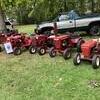
Posted in here in 2018 by @Tankman
-
The point about the F plate trapping water is worth heeding, since that corrosion tends to come back if the welds aren't dressed properly. Grinding the face flat before priming makes sense for the Unidrive support to sit right. On the patina side, an oiled finish does suit the era better than fresh paint, though I'd be cautious about how much soak any bare steel gets before assembly. The roller stool idea is practical too, letting you test fit and check clearances without straining. Nice to see this moving forward.
-
Betcha y’all didn’t know 300
c-series don replied to 953 nut's topic in non tractor related discussion
I briefly met Rod one year at our FD carnival. I run our dunking booth, so when he walked up to throw a few balls I jokingly asked him if he wanted to get in the booth and get dunked?!!! He politely declined, he threw a few balls, we shook hands and he went on his way! If I remember correctly, he is pictured in one of the Straight From The Horses Mouth books on a mid sixties Wheel Horse. When I have time, I’ll find the picture. Of course by then someone else will probably post it!!! -
FWIW, my advice is to leave the “free" money in the Trump account and start child- or parent-owned 529s for any additional contributions.
-
 okarcher joined the community
-
I would estimate it in the 200lb range.
-
@ David Bradley , noting your cable swing area , went over to SHOULDER BOLTS , LONG AGO ,? insuring smooth lubricated swing , lets you literally dial in perfect setting with flat washers and elastic Lok nut , that really enhances , plow swing lever point . never moves on threaded area . pete
-
Thank you Gary!
-
Just a few pics with some guys hanging out around the ranch.
-

2026 Deer and Fish Tales
SylvanLakeWH replied to Ed Kennell's topic in non tractor related discussion
First morning with new crossbow... sighted in great. Very pleased with its performance. Beautiful day! No deer yet...